Fair Value Gaps Explained Deeper
What is a fair value gap and why do they fill? A deeper explanation of fair value gaps, price imbalance, liquidity, and the concept of filling the void.

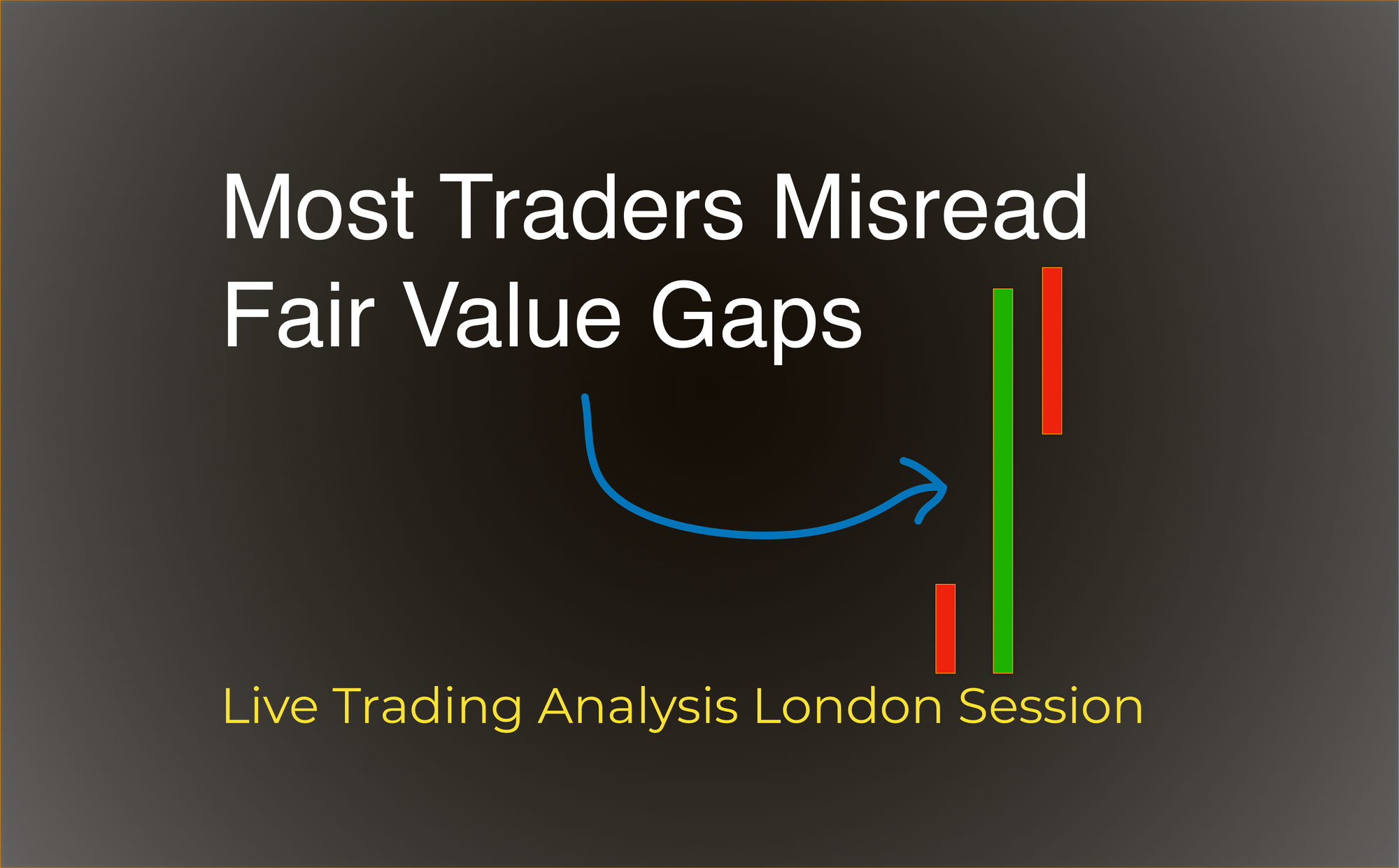
Why Price Returns to Fill the Void
What Is a Fair Value Gap?
A fair value gap is often described as an imbalance in price.
It appears when price moves aggressively in one direction and leaves behind a “void” — an area where trading participation was thin and price moved too quickly to fully transact.
Many traders mark these gaps on a chart as potential areas where price may later return.
But the real question is not simply where the fair value gap is.
It is why price often comes back to it.
Why Do Fair Value Gaps Fill?
This is where many explanations stop too early.
A fair value gap is not just a pattern.
It can represent unfinished business in the auction process.
When price moves too fast, it can leave behind imbalance.
Markets often seek to rebalance that inefficiency.
That is one reason price may revisit these voids.
This is what many traders refer to as filling the void.
Fair Value Gaps and Market Participation
One way to view a fair value gap is through participation.
Rather than seeing a chart pattern alone, think of it as evidence of how orders entered the market.
Rapid displacement often signals urgency.
The return into the gap may signal rebalancing, liquidity interaction, or a revisit to an area the market moved through too quickly.
That is a much deeper concept than simply drawing boxes on a chart.
The Mistake Many Traders Make With Fair Value Gaps
Many traders treat fair value gaps mechanically:
- Find the gap
- Wait for price to return
- Enter blindly
But context matters.
Not every fair value gap behaves the same.
The surrounding structure, liquidity, and market intent matter.
Understanding the gap is more important than merely spotting one.
Fair Value Gaps as “Voids” in Price
I often describe these as voids because that framing changes how you see them.
A void suggests something incomplete.
Something price may be drawn back toward.
That perspective often helps traders move beyond seeing fair value gaps as just another setup and start understanding them as part of market structure itself.
Final Thoughts
Fair value gaps are popular for a reason.
But their value is not in drawing rectangles on a chart.
It is in understanding what those imbalances may represent.
When you begin to see them as areas of participation imbalance and unfinished business, the concept becomes much more powerful.
That is what I explore more deeply in the accompanying live session.
If you have been studying fair value gaps, this may help you see them in a very different way.
 MJC Training Ltd